Category Archives: United States

Post-Mardi Gras respite in Algiers Point

Standard

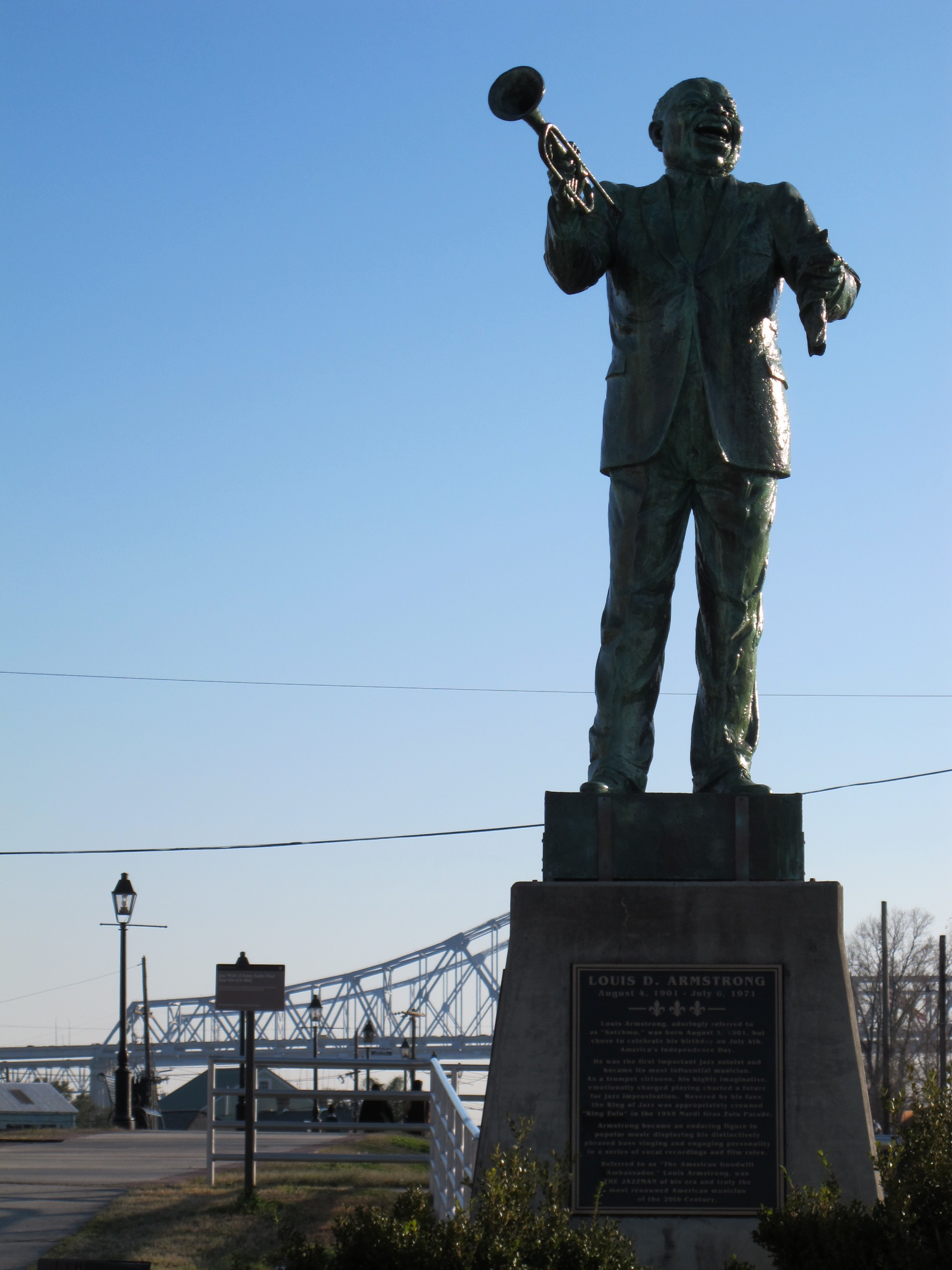
Louis Armstrong statue in Algiers

New Orleans is once again sobering up from the Mardi Gras madness. According to Mayor Mitch Landrieu, “to put it simply, Mardi Gras 2012 rocked.” With 97% hotel occupation rate and busy restaurants and businesses, that’s great news for the city still in the post-Katrina recovery. But those who are leaving NOLA (no doubt with a killer headache) right after Mardi Gras are missing out on some great places to explore beyond the French Quarter. One of those places is Algiers Point.

Anybody gazing across the Mighty Mississippi from Jackson Square has seen it on the other bank. Located directly on the other side of the river bend, Algiers Point is the second oldest neighborhood in the city and used to be a separate settlement until incorporation into New Orleans in 1840. All it takes to get there is just a short ferry ride – the same one featured in Denzel Washington’s 2006 movie Déjà Vu, nota bene the first major film to be shot in the city after its hurricane devastation. No worries, despite what you see in the opening scene the passage is quite safe =)

Crossing the Mississippi provides a whole new perspective on New Orleans. The familiar landmark of St. Louis Cathedral looks remarkable from the water, getting smaller and smaller as the ferry inches toward the Algiers shore. Algiers Point, the oldest part of the Algiers neighborhood, greets visitors with the stature of Louis Armstrong – and the atmosphere of a 19th century village, which can be a welcome respite from Bourbon Street’s din and debauchery. Read the rest of this entry
Presidents’ Day at the Library of Congress

Standard

Gutenberg Bible at the Library of Congress (source: http://www.loc.gov)

I’ve been to the Library of Congress many times before and always loved it. The Library was created back in 1800 when the government moved from Philadelphia to Washington, which makes it the oldest federal cultural institution in the U.S. It was initially housed in various parts of the Capitol and not until 1897 did it gain its own separate space known today as the Jefferson Building.

The Great Hall welcomes visitors with two grand marble staircases on each side with larger-than-life female figure holding a torch of electric light, and colorful mosaics devoted to the disciplines such as Theology and Law. This light-filled, soaring space really dazzles with unique works created by nearly 50 American painters and sculptors. And just beyond the point where you pass under the grand “Library of Congress” sign above a tall archway resides a true gem of the Library: Gutenberg Bible. It is one of only three complete copies printed on treated calfskin, or vellum, that survived to this day (the other two are in Paris and London). Read the rest of this entry

The city of roses and bridges

Standard

Portland roses

Thinking about Washington, DC streetcars made me think about Portland – and how easy it was to get around without a car. The Portland Streetcar, which opened in 2001, is the first new streetcar system in the U.S. since WWII. Combined with the network of MAX light rail it makes for a great public transportation system – unfortunately a pretty rare thing in this country. Portland is just such a friendly and pleasant place! Public transportation that works is just one element of it. The city also consistently ranks as one of the “greenest” in America based on a variety of economic, environmental and clean tech categories.

Portland is called the City of Roses – quite deservedly. There are several theories as to where that nickname came from but the undisputed fact is that roses have a long tradition here. Back in 1888 the first show of the Portland Rose Society took place and Portland Rose Festival has been an annual tradition since the early 20th century. Not surprisingly, the place not to miss on a visit to Portland is rose related: the International Rose Test Garden. Read the rest of this entry

Streetcars of yore and of tomorrow

Standard

New DC streetcar (image source: http://dc.gov)

As a European I have a special fondness for streetcars. Yes, they can be noisy and a bit slow but they get you where you need to go and all that Old World charm makes me love them! But they are not as easy to find on this side of the Atlantic. American cities used to have streetcars aplenty but due to a variety of factors – not the least of them being the determination of Big Oil and Big Auto to put everybody behind the wheel of a car – few survived various so-called urban redevelopment plans and suburban sprawl. For one, January 28, 1962 marked the end of the century of streetcars in Washington, DC (literally: the first line started operating in 1862). It makes this year a round 50th anniversary of a streetcar-less city. Read the rest of this entry

Out of the mountain of despair: MLK Memorial

Standard

MLK Memorial

This has been on my to-do list for a while, so it only seemed fitting to finally visit Martin Luther King Jr’s Memorial on this sunny but chilly Monday (off). I’ve seen the Memorial from a distance before while driving by but never up close. It opened to the public last August but the official dedication ceremony was delayed until October due to Hurricane Irene. Many visitors have already been there since then. Obviously today it was an especially popular destination with whole families out and about despite the frigid temperature. The visitors span the demographic gamut: kids in colorful hats, couples strolling hand in hand, even a grandma with a walker. Everybody – including me – snapping lots of pictures.

The Memorial sits on the westen edge of the Tidal Basin along the axis linking the Jefferson and Lincoln Memorials. It consists of the three main elements. First, symbolic Mountain of Despair, a massive boulder with a passageway carved right through it, forms the main gate to the Memorial. The centerpiece of the Memorial, a Stone of Hope, rises a few feet beyond that gate, with a monumental relief of Martin Luther King carved as emerging from the far side of the granite mass. On both sides, a two-winged inscription wall shows excerpts from King’s sermons and speeches. Read the rest of this entry

Keep Austin weird. Seriously, please do!

Standard

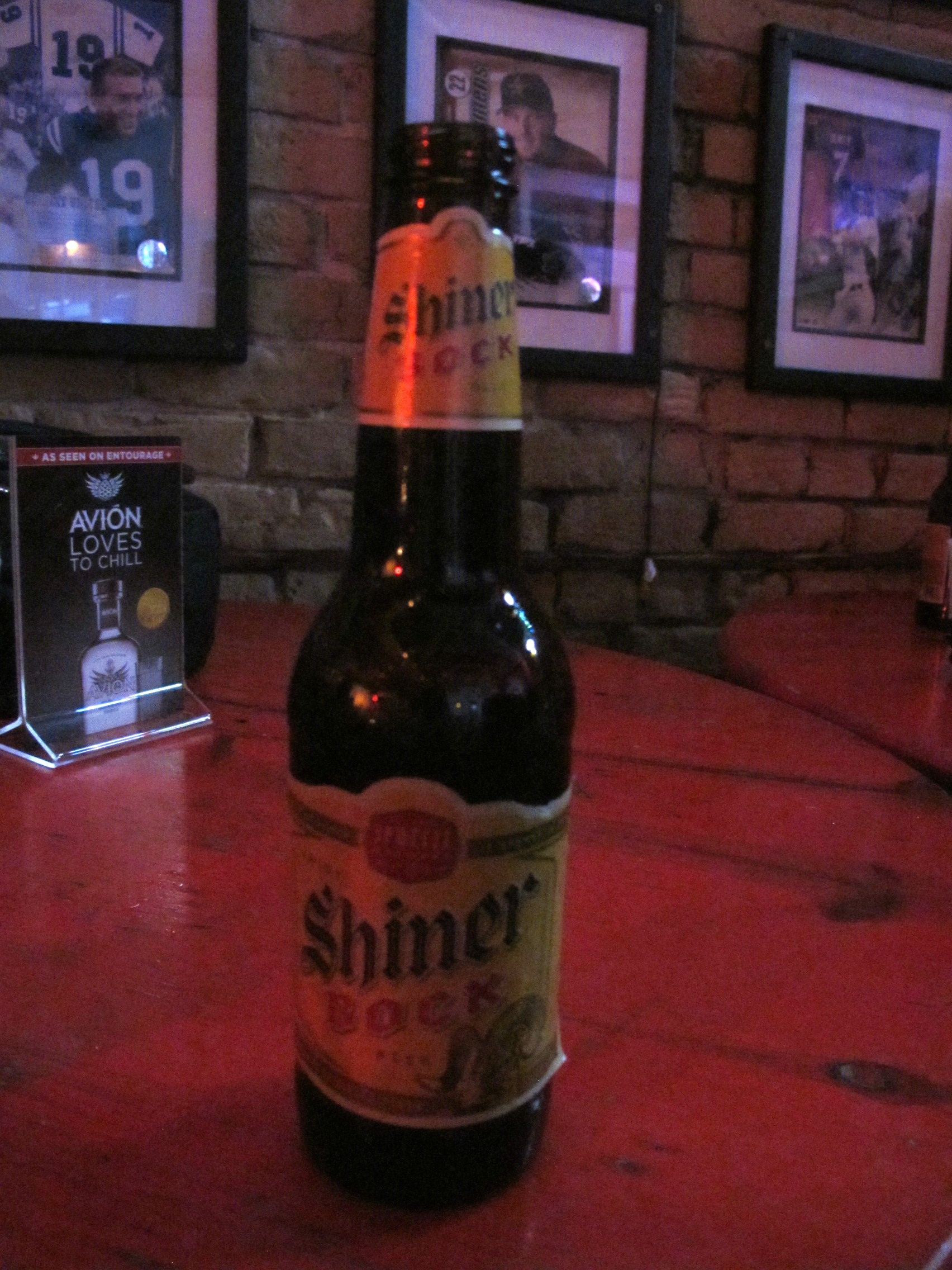
Legendary Shiner at the legendary Maggie Mae's on 6th Street

Just got back from a short trip to Austin. People ask me how was Texas? And I don’t really know because it didn’t feel like I was in Texas. For one, zip car equivalents here are smarts, which is something I never thought I would see in the U.S. and especially in the Lone Star State. “Keep Austin weird” is a popular local slogan and there is definitely something to it. I wasn’t on a lookout for all things weird although there are plenty if you’re so inclined (and yes, chicken s**t bingo is a real thing =) My dual focus was music and food – and Austin delivers on both accounts.

The self-proclaimed live music capital of the world, Austin brings to mind big names like Willie Nelson or Janis Joplin. And the nightly music scene keeps thriving, especially on the iconic 6th Street. To find out who’s playing where check out The Austin Chronicle or Austin Metro Entertainment. I had two favorites. Blue Monday Blues Jam at Maggie Mae’s with Mike Milligan, accurately described on stage by the Austin Post as “a force of nature, a bundle of musical energy, an explosive, emotive singer and one of the best harp players the blues has ever seen.” The second was Carolyn Wonderland at The Parish. Incidentally, I heard an interview with her on NPR the day my husband and I left for Austin, without knowing who she was at the time. What an amazing artist! Frequently compared to Janis Joplin and Stevie Ray Vaughan, she has a great voice and awesome guitar skills (she plays with her fingers rather than a pick). Coupled with a few bottles of Shiner and Real Ale such great music makes for a perfect Austin evening. Read the rest of this entry

Winter wonderland on Antelope Island

Standard

A hawk (I think) gazing across frozen Great Salt Lake toward Antelope Island

I had never heard of Antelope Island until my trip to Utah last year. This largest island on the Great Salt Lake (about 40 sq miles) in the summer provides a great place for hiking, biking, horseback riding and everything in between with miles of picturesque trails. But a visit there in winter is also well worth it – breathtaking in fact. First, there is getting there. Driving on a narrow road that connects the island to Salt Lake City mainland is like skating seven miles straight across a giant empty ice-rink. Frozen lake surface is bare and quiet, dotted only by a few moving black spots. Just squint your eyes… coyotes. Once you’re there the key attraction is a free-roaming herd of 500 bisons. Introduced on the island in 1893 (just 12 animals to start with brought there by boat – I guess they liked this romantic seclusion), today they are an intergal part of the landscape. Seeing dozens of them just hanging out in a distance, their dark silhouettes sharply contrasting with milky white show and the backdrop of the island’s mountainous interior is quite unreal. Read the rest of this entry

O Christmas tree

Standard

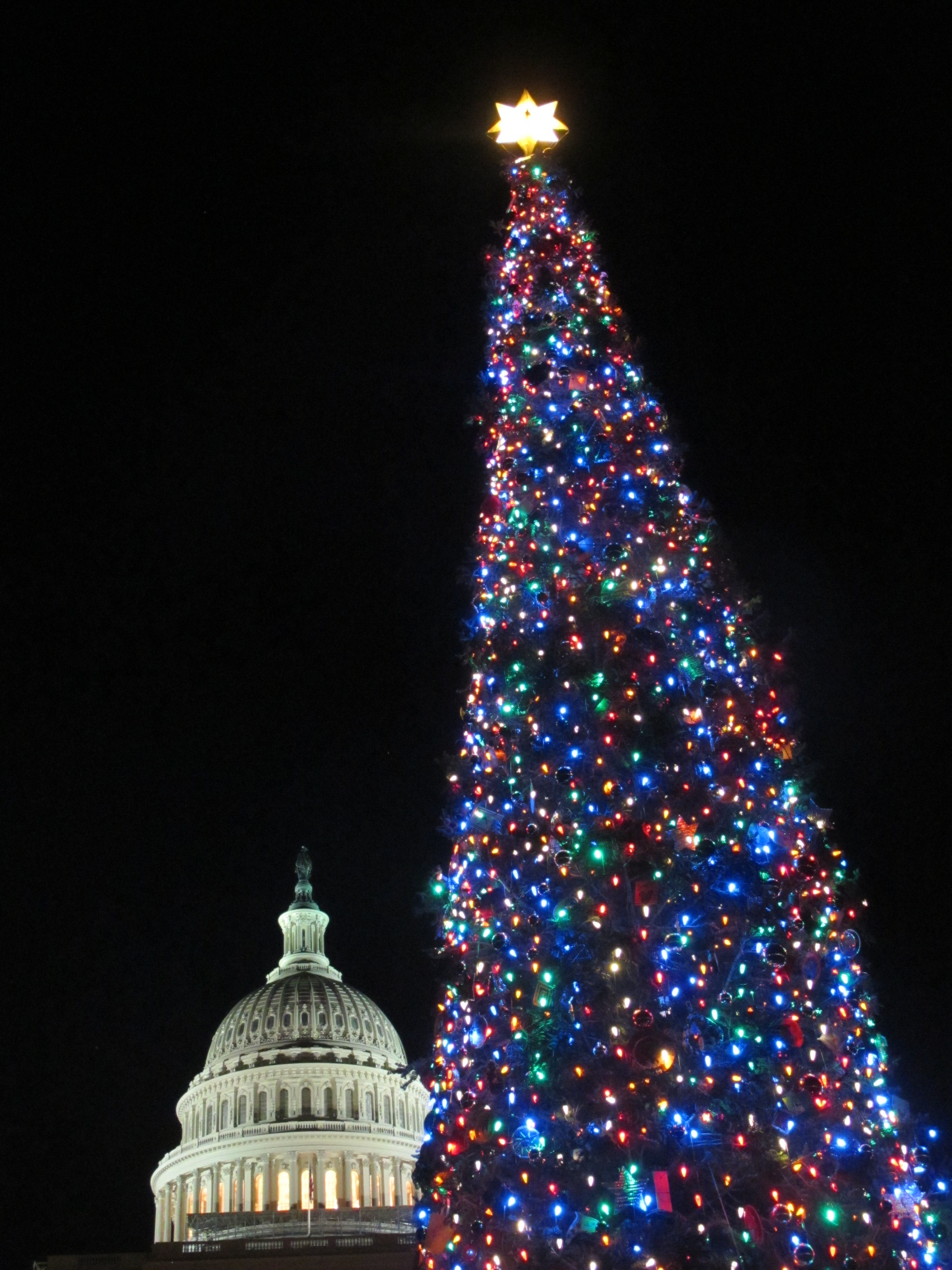
Capitol Christmas tree

Pretty much everybody knows about the National Christmas Tree – a magnificently decorated conifer in front of the White House lit in a crowd-pleasing ceremony. The tradition started in 1923 and is still going strong. But fewer people realize that there is another great location in Washington to enjoy holiday spirit with a beautiful tree as the backdrop: the Capitol. This year the Capitol Christmas Tree is a gorgeous Sierra white fir, 118 years old and 63 feet tall at harvest, that traveled more than 4,500 miles during its three-week tour en route to DC from California’s Stanislaus National Forest. Providing a Capitol Tree has become the proud task of one of the National Forests since 1970.

I skipped the lighting ceremony (mostly because John Boehner as Speaker of the House was doing the honors =) but took a walk there on Christmas evening. The sight was wonderful indeed! The tree is really massive – equivalent to about 6-story tall building – but surprisingly slender and perfectly symmetrical. 10,000 LED lights light up the night and the citizens of California prepared 5,000 ornaments that adorn the evergreen branches. For the most part they are beautiful, thoughtful, and touching although some made me wonder: a rubber chicken? Lakers t-shirt? Well, the theme was “California Shines” but still… Read the rest of this entry

The other Florida

Standard

Hotel formerly known as the Dunes (photo: http://www.hiexpress.com)

When the weather in the northeast turns cold, my thoughts migrate south in a snowbird fashion. Today I’m thinking about one of my favorite Florida escapes – Pensacola. More specifically, I mentally teleport to the Dunes hotel sitting on a narrow strip of Santa Rosa Island. It faces the Gulf and is separated from the mainland by a long sound, which means that every guest room faces the water. I still remember walking into my room and being greeted by the soft humming of the ocean surf, so close it seemed like I could just outstretch my hand and touch it. And I couldn’t believe my eyes when I saw dolphins playfully jumping between the waves just offshore.

Santa Rosa is a perfect escape. The site of Spanish arrival in the early 16th century, this 40-mile barrier island today belongs in part to the Gulf Islands National Seashore with the landscape ranging from gleaming white beaches and rugged maritime vegetation to historic Fort Pickens on the island’s western tip. Built in 1834, it was the largest of four forts guarding Pensacola Harbor. During the Civil War, Fort Pickens was reinforced the day after Fort Sumter surrendered, later withheld the Confederate assault in the Battle of Santa Rosa Island, and became one of the few southern forts to continuously remain in Union hands. The Fort stayed under military use until after WWII when its old fortifications and gun batteries became obsolete and now is a part of the Seashore. Read the rest of this entry

Walkin’ to New Orleans

Standard

New Orleans street

New Orleans is an old, thick book that I’ve barely managed to crack open in my two (so far) visits there. But I love it, pure and simple, and can’t wait to get more of it. But then who wouldn’t? It takes one meal at Bayona, a few morsels of chargrilled goodness at Acme Oyster House, or a bite o’beignet at Cafe du Monde to want to stay forever. (Yes, there is a pattern here: a path to my heart often leads through stomach.) Most visitors never venture outside the French Quarter – and although there is surely enough there to keep you busy, there is definitely more to the city. Colorful shotgun houses and beautiful Holy Name of Mary Catholic Church are just a short ferry ride across the Mighty Mississippi in Algiers Point. Impressive mansions – including the house where Jefferson Davis died in 1889 – are only a streetcar-hop away in the Garden District. And then there are the cemeteries. Ancient white vaults, angels cast in stone, and faded names carved on weather-worn tombstones tell the story of generations past. St. Louis Cemetery #1, the oldest one in the city dating back to 1789, is the closest to the French Quarter. It’s just across North Rampart Street and yet ages away, stretching back to the time when this place was called Nueva Orleans. Read the rest of this entry